Summer Grazing
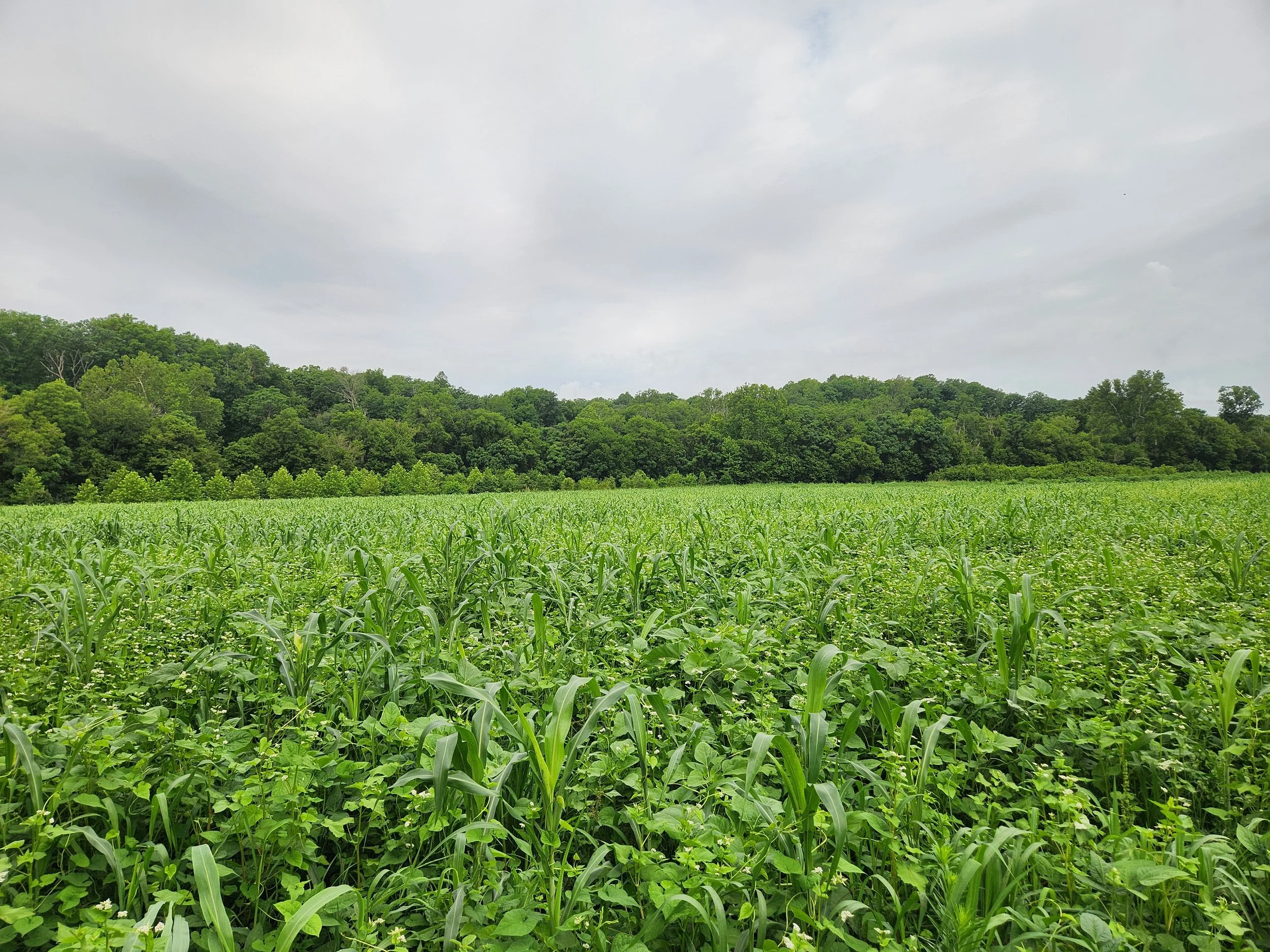
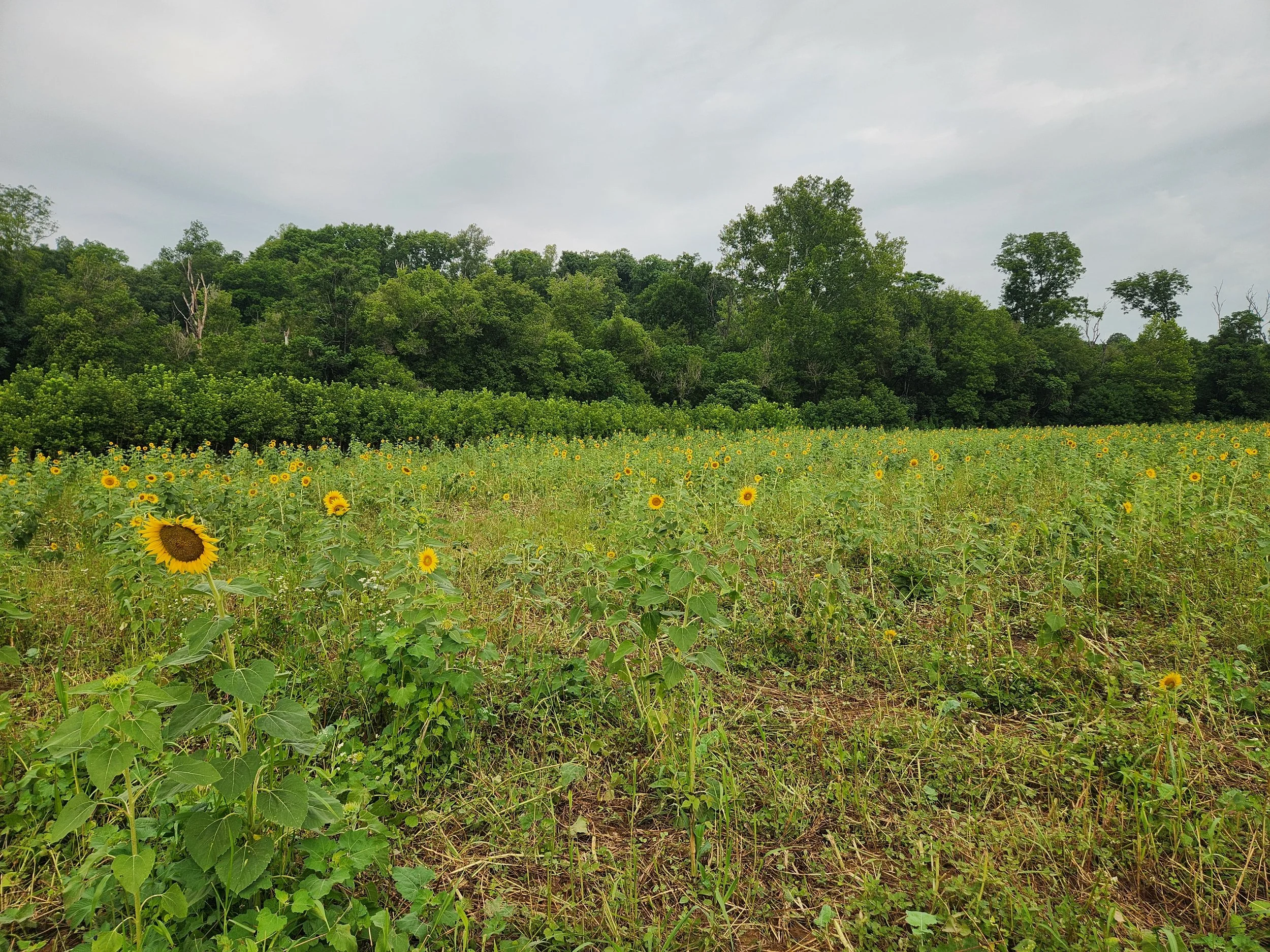
Now that we've gotten a bit of rain, things are changing for the cattle! We love to graze them on our "summer Max Mix" cover crop. You might remember photos of it being over the cattles' heads as they graze. We definitely don't have that level of growth (yet) this summer because of the dry conditions but we were able to graze the cattle on some shorter "Summer Max Mix." See photos of what it looks like before a graze and after a graze. The mix contains sorghum-sudangrass, cowpeas, buckwheat, sunflowers and sometimes sunhemp. The cattle don't eat the sunflowers, so those are all that's left when they move out of the field! The birds enjoy the sunflowers and usually the crops they munched (at least the grass part) will re-grow and add even more carbon to our fields.
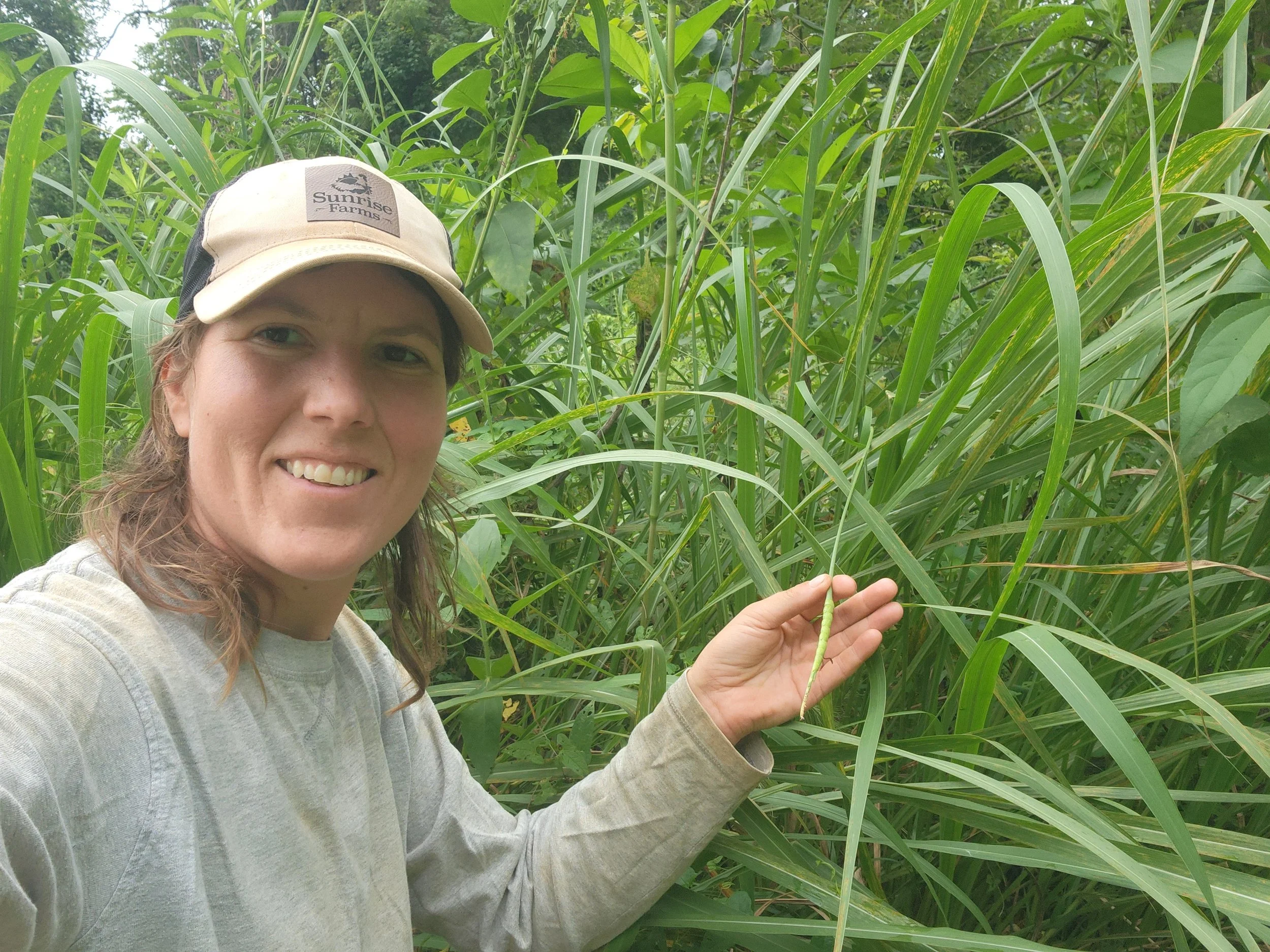
The other exciting summer grazing update is that we are finally starting to see some acceleration in the growth and spreading of two of our NATIVE warm-season grass types. I can't tell you how exciting this is for me and Nat. It has been one of the silver linings of this drought time. These grasses have epically deep root systems which makes them highly drought tolerant and also allows them to put on ridiculous biomass during the summer. This biomass creates a massive carbon sink below the soil surface and it also creates a huge food source potential for cattle! Imagine eating grass that's 5' tall instead of grass that's 1' tall!
We've had both eastern gamma grass and big bluestem (aka turkey foot) present on the farm for a long time, but they have been pretty small clumps and they have been growing slowly. They first appeared in some of the "marginal" areas and in some of our buffer strip plantings, which were the first areas to receive our "reduced mowing" schedule when Nat and I took over farm management in 2020. It's been a slow road, but the clumps have grown and multiplied, and we have several bunches of native grasses now growing inside the fenced areas of our proper cattle pasture.
We're prioritizing these species through our mowing schedules and also by collecting their seeds and spreading them behind the pigs in areas where the grass will do well. We wouldn't want all our pastures to be 100% these species because they die back in winter, but having a lot of them give us so many grazing and haying options in the summer if we keep having hot dry ones.
Beyond just the cattle benefits, there are many grassland species that prefer habitats with these bunching grasses because their growth structure does not create a sod or a thatch, or the thick mat of vegetation that makes it hard for some creatures to get around in. In particular, our native quail, the Bobwhite, LOVES these bunchgrass meadows and we have been hearing tons of them, more than ever before, all over the farm in new areas, a lot of times in areas with these new grasses!
We're dreaming of the day when we have full-on warm season grass meadows all over this farm!
Below you can see a fresh pasture before the cattle begin grazing it, and after, followed by Michelle showing us the eastern gamma grass.